Monday, April 15, 2013

April 15 -- Bliss Carman


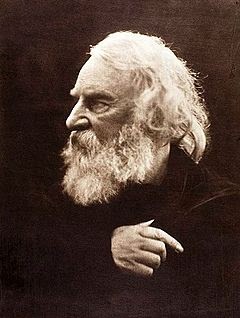
[William] Bliss Carman   
April 15, 1861 - June 8, 1929


                                       A Song Before Sailing

                              Wind of the dead men's feet,
                              Blow down the empty street
                              Of this old city by the sea
                              With news for me!
                              Blow me beyond the grime
                              And pestilence of time!
                              I am too sick at heart to war
                              With failure any more.
                              Thy chill is in my bones;
                              The moonlight on the stones
                              Is pale, and palpable, and cold;
                              I am as one grown old.

                              I call from room to room
                              Through the deserted gloom;
                              The echoes are all words I know,
                              Lost in some long ago.

                              I prowl from door to door,
                              And find no comrade more.
                              The wolfish fear that children feel
                              Is snuffing at my heel.

                              I hear the hollow sound
                              Of a great ship coming round,
                              The thunder of tackle and the tread
                              Of sailors overhead.

                              That stormy-blown hulloo
                              Has orders for me, too.
                              I see thee, hand at mouth, and hark,
                              My captain of the dark.

                              O wind of the great East,
                              By whom we are released
                              From this strange dusty port to sail
                              Beyond our fellows' hail,

                              Under the stars that keep
                              The entry of the deep,
                              Thy somber voice brings up the sea's
                              Forgotten melodies;

                              And I have no more need
                              Of bread, or wine, or creed,
                              Bound for the colonies of time
                              Beyond the farthest prime.

                              Wind of the dead men's feet,
                              Blow through the empty street;
                              The last adventurer am I,
                              Then, world, goodby!


                                     Under the April Moon

                              
                              Oh, well the world is dreaming
                              Under the April moon,
                              Her soul in love with beauty,
                              Her senses all a-swoon!
                              Pure hangs the silver crescent
                              Above the twilight wood,
                              And pure the silver music
                              Wakes from the marshy flood.
                              O Earth, with all thy transport,
                              How comes it life should seem
                              A shadow in the moonlight,
                              A murmur in a dream?


                                 A More Ancient Mariner

                              The swarthy bee is a buccaneer,
                              A burly velveted rover,
                              Who loves the booming wind in his ear
                              As he sails the seas of clover.

                              A waif of the goblin pirate crew,
                              With not a soul to deplore him,
                              He steers for the open verge of blue
                              With the filmy world before him.

                              His flimsy sails abroad on the wind
                              Are shivered with fairy thunder;
                              On a line that sings to the light of his wings
                              He makes for the lands of wonder.

                              He harries the ports of Hollyhocks,
                              And levies on poor Sweetbriar;
                              He drinks the whitest wine of Phlox,
                              And the Rose is his desire.

                              He hangs in the Willows a night and a day;
                              He rifles the Buckwheat patches;
                              Then battens his store of pelf galore
                              Under the taughtest hatches.

                              He woos the Poppy and weds the Peach,
                              Inveigles Daffodilly,
                              And then like a tramp abandons each
                              For the gorgeous Canada Lily.

                              There's not a soul in the garden world
                              But wishes the day were shorter,
                              When Mariner B. puts out to sea
                              With the wind in the proper quarter.

                              Or, so they say! But I have my doubts;
                              For the flowers are only human,
                              And the valor and gold of a vagrant bold
                              Were always dear to woman.

                              He dares to boast, along the coast,
                              The beauty of Highland Heather,-
                              How he and she, with night on the sea,
                              Lay out on the hills together.

                              He pilfers every port of the wind,
                              From April to golden autumn;
                              But the theiving ways of his mortal days
                              Are those his mother taught him.

                              His morals are mixed, but his will is fixed;
                              He prospers after his kind,
                              And follows an instinct compass-sure,
                              The philosophers call blind.

                              And that is why, when he comes to die,
                              He'll have an earlier sentence
                              Than someone I know who thinks just so,
                              And then leaves room for repentance.

                              He never could box the compass round;
                              He doesn't know port from starboard;
                              But he knows the gates of the Sundown Straits,
                              Where the choicest goods are harbored.

                              He never could see the Rule of Three,
                              But he knows the rule of thumb
                              Better than Euclid's, better than yours,
                              Or the teachers' yet to come.

                              He knows the smell of the hydromel
                              As if two and two were five;
                              And hides it away for a year and a day
                              In his own hexagonal hive.

                              Out in the day, hap-hazard, alone,
                              Booms the old vagrant hummer,
                              With only his whim to pilot him
                              Throught the splendid vast of summer.

                              He steers and steers on the slant of the gale,
                              Like the fiend or Vanderdecken;
                              And there's never an unknown course to sail
                              But his crazy log can reckon.

                              He drones along with his rough sea-song
                              And the throat of a salty tar,
                              This devil-may-care, till he makes his lair
                              By the light of a yellow star.

                              He looks like a gentleman, lives like a lord,
                              And makes like a Trojan hero;
                              Then loafs all winter upon his hoard,
                              With the mercury at zero.


--Cat

Sunday, April 14, 2013

April 14 – James Branch Cabell


James Branch Cabell  
April 14, 1879 - May 5, 1958


                                 Ballad Of Plagiary


      "Freres et matres, vous qui cultivez"--PAUL VERVILLE.
      
      Hey, my masters, lords and brothers, ye that till the fields of rhyme,
      Are ye deaf ye will not hearken to the clamor of your time?
      Still ye blot and change and polish--vary, heighten and transpose--
      Old sonorous metres marching grandly to their tranquil close.
      Ye have toiled and ye have fretted; ye attain perfected speech:
      Ye have nothing new to utter and but platitudes to preach.
      And your rhymes are all of loving, as within the old days when
      Love was lord of the ascendant in the horoscopes of men.
      Still ye make of love the utmost end and scope of all your art;
      And, more blind than he you write of, note not what a modest part
      Loving now may claim in living, when we have scant time to spare,
      Who are plundering the sea-depths, taking tribute of the air,--
      Whilst the sun makes pictures for us; since to-day, for good or ill,
      Earth and sky and sea are harnessed, and the lightnings work our will.
      Hey, my masters, all these love-songs by dust-hidden mouths were sung
      That ye mimic and re-echo with an artful-artless tongue,--
      Sung by poets close to nature, free to touch her garments' hem
      Whom to-day ye know not truly; for ye only copy them.
      Them ye copy--copy always, with your backs turned to the sun,
      Caring not what man is doing, noting that which man has done.
      _We are talking over telephones, as Shakespeare could not talk;_
      _We are riding out in motor-cars where Homer had to walk;_
      _And pictures Dante labored on of mediaeval Hell_
      _The nearest cinematograph paints quicker, and as well._
      But ye copy, copy always;--and ye marvel when ye find
      This new beauty, that new meaning,--while a model stands behind,
      Waiting, young and fair as ever, till some singer turn and trace
      Something of the deathless wonder of life lived in any place.
      Hey, my masters, turn from piddling to the turmoil and the strife!
      Cease from sonneting, my brothers; let us fashion songs from life.
      _Thus I wrote ere Percie passed me. . . . Then did I epitomize_
      _All life's beauty in one poem, and make haste to eulogize_
      _Quite the fairest thing life boasts of, for I wrote of Percie's eyes._


--Cat

Thursday, March 21, 2013

World Poetry Day - March 21


                            Florence Margaret Smith, known as Stevie Smith 
                                   September 20, 1902 – March  7, 1971


                               Alone in the Woods by Stevie Smith

                              Alone in the woods I felt
                              The bitter hostility of the sky and the trees
                              Nature has taught her creatures to hate
                              Man that fusses and fumes
                              Unquiet man
                              As the sap rises in the trees
                              As the sap paints the trees a violent green
                              So rises the wrath of Nature's creatures
                              At man
                              So paints the face of Nature a violent green.
                              Nature is sick at man
                              Sick at his fuss and fume
                              Sick at his agonies
                              Sick at his gaudy mind
                              That drives his body
                              Ever more quickly
                              More and more
                              In the wrong direction.


--Cat

Wednesday, February 27, 2013

February 27 -- Longfellow


Henry Wadsworth Longfellow February 27, 1807 – March 24, 1882


                              A Gleam of Sunshine


                              This is the place. Stand still, my steed,
                              Let me review the scene,
                              And summon from the shadowy Past
                              The forms that once have been.

                              The Past and Present here unite
                              Beneath Time's flowing tide,
                              Like footprints hidden by a brook,
                              But seen on either side.

                              Here runs the highway to the town;
                              There the green lane descends,
                              Through which I walked to church with thee,
                              O gentlest of my friends!

                              The shadow of the linden-trees
                              Lay moving on the grass;
                              Between them and the moving boughs,
                              A shadow, thou didst pass.

                              Thy dress was like the lilies,
                              And thy heart as pure as they:
                              One of God's holy messengers
                              Did walk with me that day.

                              I saw the branches of the trees
                              Bend down thy touch to meet,
                              The clover-blossoms in the grass
                              Rise up to kiss thy feet,

                              "Sleep, sleep to-day, tormenting cares,
                              Of earth and folly born!"
                              Solemnly sang the village choir
                              On that sweet Sabbath morn.

                              Through the closed blinds the golden sun
                              Poured in a dusty beam,
                              Like the celestial ladder seen
                              By Jacob in his dream.

                              And ever and anon, the wind,
                              Sweet-scented with the hay,
                              Turned o'er the hymn-book's fluttering leaves
                              That on the window lay.

                              Long was the good man's sermon,
                              Yet it seemed not so to me;
                              For he spake of Ruth the beautiful,
                              And still I thought of thee.

                              Long was the prayer he uttered,
                              Yet it seemed not so to me;
                              For in my heart I prayed with him,
                              And still I thought of thee.

                              But now, alas! the place seems changed;
                              Thou art no longer here:
                              Part of the sunshine of the scene
                              With thee did disappear.

                              Though thoughts, deep-rooted in my heart,
                              Like pine-trees dark and high,
                              Subdue the light of noon, and breathe
                              A low and ceaseless sigh;

                              This memory brightens o'er the past,
                              As when the sun, concealed
                              Behind some cloud that near us hangs
                              Shines on a distant field.


--Cat


Sunday, November 11, 2012

Remembrance Day


I have two different music videos posted today to commemorate the brave soldiers who have died for their country and for peace.

Since I first heard it in 1985, I've loved the song Brothers in Arms by Dire Straits. The lyrics are moving and so appropriate for the message they send.

This is a powerful video of the song and shows the horror, the senselessness, and stupidity of war. Who gains? A wealthy few. Who loses? Everyone.


I heard The White Cliffs of Dover by Vera Lynn on Remembrance Day several years ago on CBC public radio. 

The song was written in 1941 and recorded in 1942, when Europe was in the grip of the second world war. An immensely popular song, it's filled with hope that there will be an end, there will be an 'after.'

Can we now, seventy years later, still have that hope?


I cry when I hear both of these.

-- Cat

Thursday, July 12, 2012

July 12 -- Henry David Thoreau

                                       Maxham daguerreotype of Thoreau made in 1856


                                Henry David Thoreau  July 12, 1817 - May 6, 1862


Massachusetts-born Thoreau is best known for his book Walden, based on journals he wrote during a two-year solitary stay [1845-1847] at Walden Pond, and his essay Civil Disobedience, a statement of his philosophy of passive resistance against unjust laws and wars. [Later influencing Gandhi and others]

He was a historian, a philosopher, an ardent naturalist and environmentalist, was involved in the transcendental movement along with Emerson and Alcott, opposed war, championed abolition. He wrote detailed observations of nature and his surroundings, wrote several travel books, and became a follower of Darwin.

He left an impressive body of work: essays, poetry, books and articles on natural history, philosophy, politics...

He died of tuberculosis at the age of 44.


Nature
by Henry David Thoreau   
 
O Nature! I do not aspire
To be the highest in thy choir, -
To be a meteor in thy sky,
Or comet that may range on high;
Only a zephyr that may blow
Among the reeds by the river low;
Give me thy most privy place
Where to run my airy race.

In some withdrawn, unpublic mead
Let me sigh upon a reed,
Or in the woods, with leafy din,
Whisper the still evening in:
Some still work give me to do, -
Only - be it near to you!

For I'd rather be thy child
And pupil, in the forest wild,
Than be the king of men elsewhere,
And most sovereign slave of care;
To have one moment of thy dawn,
Than share the city's year forlorn.


Mist
by Henry David Thoreau   

Low-anchored cloud,
Newfoundland air,
Fountain head and source of rivers,
Dew-cloth, dream drapery,
And napkin spread by fays;
Drifting meadow of the air,
Where bloom the daisied banks and violets,
And in whose fenny labyrinth
The bittern booms and heron wades;
Spirit of the lake and seas and rivers,
Bear only perfumes and the scent
Of healing herbs to just men's fields!


The Inward Morning
by Henry David Thoreau

Packed in my mind lie all the clothes
Which outward nature wears,
And in its fashion's hourly change
It all things else repairs.
In vain I look for change abroad,
And can no difference find,
Till some new ray of peace uncalled
Illumes my inmost mind.

What is it gilds the trees and clouds,
And paints the heavens so gay,
But yonder fast-abiding light
With its unchanging ray?

Lo, when the sun streams through the wood,
Upon a winter's morn,
Where'er his silent beams intrude,
The murky night is gone.

How could the patient pine have known
The morning breeze would come,
Or humble flowers anticipate
The insect's noonday hum--

Till the new light with morning cheer
From far streamed through the aisles,
And nimbly told the forest trees
For many stretching miles?

I've heard within my inmost soul
Such cheerful morning news,
In the horizon of my mind
Have seen such orient hues,

As in the twilight of the dawn,
When the first birds awake,
Are heard within some silent wood,
Where they the small twigs break,

Or in the eastern skies are seen,
Before the sun appears,
The harbingers of summer heats
Which from afar he bears.


I am the Autumnal Sun
by Henry David Thoreau

Sometimes a mortal feels in himself Nature
-- not his Father but his Mother stirs
within him, and he becomes immortal with her
immortality. From time to time she claims
kindredship with us, and some globule
from her veins steals up into our own.

I am the autumnal sun,
With autumn gales my race is run;
When will the hazel put forth its flowers,
Or the grape ripen under my bowers?
When will the harvest or the hunter's moon
Turn my midnight into mid-noon?
I am all sere and yellow,
And to my core mellow.
The mast is dropping within my woods,
The winter is lurking within my moods,
And the rustling of the withered leaf
Is the constant music of my grief...


Epitaph On The World
by Henry David Thoreau
                                                       
Here lies the body of this world,
Whose soul alas to hell is hurled.
This golden youth long since was past,
Its silver manhood went as fast,
An iron age drew on at last;
'Tis vain its character to tell,
The several fates which it befell,
What year it died, when 'twill arise,
We only know that here it lies.


– Cat

Saturday, June 02, 2012

June 2 - Thomas Hardy


Thomas Hardy (June 2, 1840 – January 11, 1928)

English poet and novelist Hardy's first fame and success came with his popular novels. Some  of his better-known works include Far from the Madding Crowd (1874), The Return of the Native (1878), The Mayor of Casterbridge (1886), Tess of the D'Urbervilles (1891), and Jude the Obscure (1895). Along with receiving literary praise, his work was criticized  as too shocking for  Victorian sensibilities, especially Tess... [about a fallen woman] and Jude... [called obscene by many]. The negative outcry against Jude prompted Hardy to stop writing novels and return to his first love, poetry. Most of his poetry was published after he was 55. He wrote more than 800 poems, many while in in his eighties.

Having achieved fame in his lifetime as great as Dickens', Thomas Hardy died on January 11, 1928, at the age of 87. His ashes are entombed in Poets' Corner at Westminster Abbey. He is considered one of the most influential English poets of the 20th century.


The Darkling Thrush 
by Thomas Hardy
       
I leant upon a coppice gate,
When Frost was spectre-gray,
And Winter's dregs made desolate
The weakening eye of day.
The tangled bine-stems scored the sky
Like strings of broken lyres,
And all mankind that haunted nigh
Had sought their household fires.

The land's sharp features seemed to me
The Century's corpse outleant,
Its crypt the cloudy canopy,
The wind its death-lament.
The ancient pulse of germ and birth
Was shrunken hard and dry,
And every spirit upon earth
Seemed fervorless as I.

At once a voice arose among
The bleak twigs overhead,
In a full-hearted evensong
Of joy illimited.
An aged thrush, frail, gaunt and small,
In blast-beruffled plume,
Had chosen thus to fling his soul
Upon the growing gloom.

So little cause for carolings
Of such ecstatic sound
Was written on terrestrial things
Afar or nigh around,
That I could think there trembled through
His happy good-night air
Some blessed Hope, whereof he knew,
And I was unaware.


An August Midnight 
by Thomas Hardy
                                                                         

A shaded lamp and a waving blind,
And the beat of a clock from a distant floor:
On this scene enter--winged, horned, and spined -
A longlegs, a moth, and a dumbledore;
While 'mid my page there idly stands
A sleepy fly, that rubs its hands . . .

II

Thus meet we five, in this still place,
At this point of time, at this point in space.
- My guests parade my new-penned ink,
Or bang at the lamp-glass, whirl, and sink.
"God's humblest, they!" I muse. Yet why?
They know Earth-secrets that know not I.


A Commonplace Day 
by Thomas Hardy
                                           
The day is turning ghost,
And scuttles from the kalendar in fits and
furtively,
To join the anonymous host
Of those that throng oblivion; ceding his place,
maybe,
To one of like degree.

I part the fire-gnawed logs,
Rake forth the embers, spoil the busy flames, and
lay the ends
Upon the shining dogs;
Further and further from the nooks the twilight's
stride extends,
And beamless black impends.

Nothing of tiniest worth
Have I wrought, pondered, planned; no one thing
asking blame or
praise,
Since the pale corpse-like birth
Of this diurnal unit, bearing blanks in all its
rays -
Dullest of dull-hued Days!

Wanly upon the panes
The rain slides as have slid since morn my
colourless thoughts; and
yet
Here, while Day's presence wanes,
and over him the sepulchre-lid is slowly lowered
and set,
He wakens my regret.

Regret--though nothing dear
That I wot of, was toward in the wide world at his
prime,
Or bloomed elsewhere than here,
To die with his decease, and leave a memory sweet,
sublime,
Or mark him out in Time . . .

--Yet, maybe, in some soul,
In some spot undiscerned on sea or land, some
impulse rose,
Or some intent upstole
Of that enkindling ardency from whose maturer
glows
The world's amendment flows;

But which, benumbed at birth
By momentary chance or wile, has missed its hope
to be
Embodied on the earth;
And undervoicings of this loss to man's futurity
May wake regret in me.


We Are Getting to the End 
by Thomas Hardy
             
We are getting to the end of visioning
The impossible within this universe,
Such as that better whiles may follow worse,
And that our race may mend by reasoning.

We know that even as larks in cages sing
Unthoughtful of deliverance from the curse
That holds them lifelong in a latticed hearse,
We ply spasmodically our pleasuring.

And that when nations set them to lay waste
Thy neighbours' heritage by foot and horse,
And hack their pleasant plains in festering seams,
They may again, - not warily, or from taste,
But tickled mad by some demonic force. -
Yes. We are getting to the end of dreams!


Weathers 
by Thomas Hardy
          
This is the weather the cuckoo likes,
And so do I;
When showers betumble the chestnut spikes,
And nestlings fly;
And the little brown nightingale bills his best,
And they sit outside at 'The Traveller's Rest,'
And maids come forth sprig-muslin drest,
And citizens dream of the south and west,
And so do I.

This is the weather the shepherd shuns,
And so do I;
When beeches drip in browns and duns,
And thresh and ply;
And hill-hid tides throb, throe on throe,
And Meadow rivulets overflow,
And drops on gate bars hang in a row,
And rooks in families homeward go,
And so do I.


--Cat