Sunday, November 22, 2015

A Tale of Two Poets


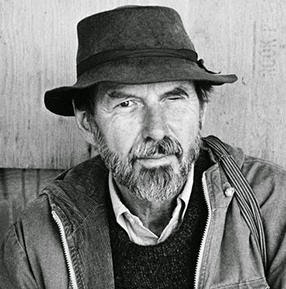
                                         Edward Fitzgerald March 31, 1809 - June 14, 1883

Edward Fitzgerald, scholar, biographer, man of letters, spent years living in seclusion in Suffolk, England. His interest in Farsi led him to translate several long works, and his translation of The Rubaiyat of Omar Khayyam became one of the most popular English poems. More paraphrase than direct translation, it's true to the original in its counsel for man to live life to the fullest while he can.


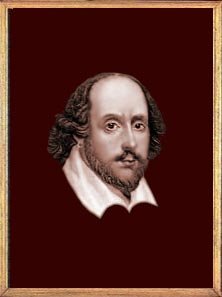
                              Omar Khayyam - Khayyam means "tent maker" ca 1048 - 1123

Born in Nishapur, Persia (Iran), Abu ol-Fath ebn-Ebrahim 'Omar ol-Khayyami, was a mathematician, scientist, astronomer, philosopher, poet.


The Rubaiyat of Omar Khayyam has been translated into most languages, including English, French, German, Italian, Russian, Chinese, Hindi, Arabic, and Urdu. Edward Fitzgerald's is the best known English translation.

In the Persian original each rubái (quatrain) is an independent composition, its thought condensed and polished to the form of epigram. Fitzgerald studied some six hundred rubáiyát in the two Omar manuscripts available to him and saw that by selection and arrangement he could control the form. He wrote to his publisher: "[The poet] begins with dawn pretty sober and contemplative; then as he thinks and drinks, grows savage, blasphemous, etc., and then again sobers down into melancholy at nightfall." Fitzgerald's translation alters somewhat the balance of moods in Omar, allowing "a less than equal proportion of the 'Drink and make merry,' which (genuine or not) recurs over-frequently in the original."


The Rubaiyat Of Omar Khayyam Of Naishapur Edward Fitzgerald

1


Awake! for Morning in the Bowl of Night
Has flung the Stone that puts the Stars to Flight:
And Lo! the Hunter of the East has caught
The Sultan's Turret in a Noose of Light.

2

Dreaming when Dawn's Left Hand was in the Sky
I heard a Voice within the Tavern cry,
"Awake, my Little ones, and fill the Cup
Before Life's Liquor in its Cup be dry."

3

And, as the Cock crew, those who stood before
The Tavern shouted—"Open then the Door!
You know how little while we have to stay,
And, once departed, may return no more."

4

Now the New Year reviving old Desires,
The thoughtful Soul to Solitude retires,
Where the WHITE HAND OF MOSES on the Bough
Puts out, and Jesus from the Ground suspires.

5

Iram indeed is gone with all its Rose,
And Jamshyd's Sev'n-ringed Cup where no one knows;
But still the Vine her ancient Ruby yields,
And still a Garden by the Water blows.

6

And David's Lips are lockt; but in divine
High piping Pehlevi, with "Wine! Wine! Wine!
Red Wine!"—the Nightingale cries to the Rose
That yellow Cheek of hers t'incarnadine.

7

Come, fill the Cup, and in the Fire of Spring
The Winter Garment of Repentance fling:
The Bird of Time has but a little way
To fly—and Lo! the Bird is on the Wing.

8

And look—a thousand Blossoms with the Day
Woke—and a thousand scattered into Clay:
And this first Summer Month that brings the Rose
Shall take Jamshyd and Kaikobad away.

9

But come with old Khayyam, and leave the Lot
Of Kaikobad and Kaikhosru forgot!
Let Rustum lay about him as he will,
Or Hatim Tai cry Supper—heed them not.

10

With me along some Strip of Herbage strown
That just divides the desert from the sown,
Where name of Slave and Sultan scarce is known,
And pity Sultan Mahmud on his Throne.

11

Here with a Loaf of Bread beneath the Bough,
A Flask of Wine, a Book of Verse—and Thou
Beside me singing in the Wilderness—
And Wilderness is Paradise enow.

12

"How sweet is mortal Sovranty!"—think some:
Others—"How blest the Paradise to come!"
Ah, take the Cash in hand and waive the Rest;
Oh, the brave Music of a distant Drum!

13

Look to the Rose that blows about us—"Lo,
Laughing," she says, "into the World I blow:
At once the silken Tassel of my Purse
Tear, and its Treasure on the Garden throw."

14

The Worldly Hope men set their Hearts upon
Turns Ashes—or it prospers; and anon,
Like Snow upon the Desert's dusty Face
Lighting a little Hour or two—is gone.

15

And those who husbanded the Golden Grain,
And those who flung it to the Winds like Rain,
Alike to no such aureate Earth are turned
As, buried once, Men want dug up again.

16

Think, in this battered Caravanserai
Whose Doorways are alternate Night and Day,
How Sultan after Sultan with his Pomp
Abode his Hour or two, and went his way.

17

They say the Lion and the Lizard keep
The Courts where Jamshyd gloried and drank deep;
And Bahram, that great Hunter—the Wild Ass
Stamps o'er his Head, and he lies fast asleep.

18

I sometimes think that never blows so red
The Rose as where some buried Caesar bled;
That every Hyacinth the Garden wears
Dropt in its Lap from some once lovely Head.

19

And this delightful Herb whose tender Green
Fledges the River's Lip on which we lean—
Ah, lean upon it lightly! for who knows
From what once lovely Lip it springs unseen!

20

Ah, my Beloved, fill the Cup that clears
TODAY of past Regrets and future Fears—
Tomorrow?—Why, Tomorrow I may be
Myself with Yesterday's Sev'n Thousand Years.

21

Lo! some we loved, the loveliest and best
That Time and Fate of all their Vintage prest,
Have drunk their Cup a Round or two before,
And one by one crept silently to Rest.

22

And we, that now make merry in the Room
They left, and Summer dresses in new Bloom,
Ourselves must we beneath the Couch of Earth
Descend, ourselves to make a Couch—for whom?

23

Ah, make the most of what we yet may spend,
Before we too into the Dust descend;
Dust into Dust, and under Dust, to lie,
Sans Wine, sans Song, sans Singer, and—sans End!

24

Alike for those who for TODAY prepare,
And those that after a TOMORROW stare,
A Muezzin from the Tower of Darkness cries
"Fools! your Reward is neither Here nor There!"

25

Why, all the Saints and Sages who discussed
Of the Two Worlds so learnedly, are thrust
Like foolish Prophets forth; their Words to Scorn
Are scattered, and their Mouth's are stopt with Dust.

26

Oh, come with old Khayyam, and leave the Wise
To talk; one thing is certain, that Life flies;
One thing is certain, and the Rest is Lies;
The Flower that once has blown for ever dies.

27

Myself when young did eagerly frequent
Doctor and Saint, and heard great Argument
About it and about: but evermore
Came out by the same Door as in I went.

28

With them the Seed of Wisdom did I sow,
And with my own hand laboured it to grow:
And this was all the Harvest that I reaped—
"I came like Water, and like Wind I go."

29

Into this Universe, and why not knowing,
Nor whence, like Water willy-nilly flowing:
And out of it, as Wind along the Waste,
I know not whither, willy-nilly blowing.

30

What, without asking, hither hurried whence?
And, without asking, whither hurried hence!
Another and another Cup to drown
The Memory of this Impertinence!

31

Up from Earth's Centre through the Seventh Gate
I rose, and on the Throne of Saturn sate,
And many Knots unravelled by the Road;
But not the Knot of Human Death and Fate.

32

There was a Door to which I found no Key:
There was a Veil past which I could not see:
Some little Talk awhile of ME and THEE
There seemed—and then no more of THEE and ME.

33

Then to the rolling Heav'n itself I cried,
Asking, "What Lamp had Destiny to guide
Her little Children stumbling in the Dark?"
And—"A blind Understanding!" Heav'n replied.

34

Then to this earthen Bowl did I adjourn
My Lip the secret Well of Life to learn:
And Lip to Lip it murmured—"While you live
Drink!—for once dead you never shall return."

35

I think the Vessel, that with fugitive
Articulation answered, once did live,
And merry-make; and the cold Lip I kissed
How many Kisses might it take—and give!

36

For in the Market-place, one Dusk of Day,
I watched the Potter thumping his wet Clay:
And with its all obliterated TongueIt murmured—
"Gently, Brother, gently, pray!"

37

Ah, fill the Cup:—what boots it to repeat
How Time is slipping underneath our Feet:
Unborn TOMORROW, and dead YESTERDAY,
Why fret about them if TODAY be sweet!

38

One Moment in Annihilation's Waste,
One Moment, of the Well of Life to taste—
The stars are setting and the Caravan Starts for the
Dawn of Nothing—Oh, make haste!

39

How long, how long, in infinite Pursuit
Of This and That endeavour and dispute?
Better be merry with the fruitful Grape
Than sadden after none, or bitter, Fruit.

40

You know, my Friends, how long since in my House
For a new Marriage I did make Carouse:
Divorced old barren Reason from my Bed,
And took the Daughter of the Vine to Spouse.

41

For "IS" and "IS-NOT" though with Rule and Line,
And "UP-AND-DOWN" without, I could define,
I yet in all I only cared to know,
Was never deep in anything but—Wine.

42

And lately, by the Tavern Door agape,
Came stealing through the Dusk an Angel Shape
Bearing a Vessel on his Shoulder; and
He bid me taste of it; and 'twas—the Grape!

43

The Grape that can with Logic absolute
The Two-and-Seventy jarring Sects confute:
The subtle Alchemist that in a Thrice
Life's leaden Metal into Gold transmute.

44

The mighty Mahmud, the victorious Lord,
That all the misbelieving and black Horde
Of Fears and Sorrows that infest the Soul
Scatters and slays with his enchanted Sword.

45

But leave the Wise to wrangle, and with me
The Quarrel of the Universe let be:
And, in some corner of the Hubbub coucht,
Make Game of that which makes as much of Thee.

46

For in and out, above, about, below,
'Tis nothing but a Magic Shadow-show,
Played in a Box whose Candle is the Sun,
Round which we Phantom Figures come and go.

47

And if the Wine you drink, the Lip you press,
End in the Nothing all Things end in—Yes—
Then fancy while Thou art, Thou art but what
Thou shalt be—Nothing—Thou shalt not be less.

48

While the Rose blows along the River Brink,
With old Khayyam the Ruby Vintage drink:
And when the Angel with his darker Draught
Draws up to thee—take that, and do not shrink.

49

'Tis all a Chequer-board of Nights and Days
Where Destiny with Men for Pieces plays:
Hither and thither moves, and mates, and slays,
And one by one back in the Closet lays.

50

The Ball no Question makes of Ayes and Noes,
But Right or Left as strikes the Player goes;
And He that tossed Thee down into the Field,
He knows about it all—He knows—HE knows!

51

The moving finger writes; and, having writ,
Moves on: nor all thy Piety nor Wit
Shall lure it back to cancel half a Line,
Nor all thy Tears wash out a Word of it.

52


And that inverted Bowl we call The Sky,
Whereunder crawling coopt we live and die,
Lift not thy hands to It for help—for It
Rolls impotently on as Thou or I.

53

With Earth's first Clay They did the Last Man's knead,
And then of the Last Harvest sowed the Seed:
Yea, the first Morning of Creation wrote
What the Last Dawn of Reckoning shall read.

54

I tell Thee this—When, starting from the Goal,
Over the shoulders of the flaming Foal
Of Heav'n Parwin and Mushtara they flung,
In my predestined Plot of Dust and Soul.

55

The Vine had struck a Fibre; which about
If clings my being—let the Sufi flout;
Of my Base Metal may be filed a Key,
That shall unlock the Door he howls without.

56

And this I know: whether the one True Light,
Kindle to Love, or Wrath, consume me quite,
One Glimpse of It within the Tavern caught
Better than in the Temple lost outright.

 57

Oh Thou, who didst with Pitfall and with Gin
Beset the Road I was to wander in,
Thou wilt not with Predestination round
Enmesh me, and impute my Fall to Sin?

58

Oh Thou, who Man of baser Earth didst make,
And who with Eden didst devise the Snake;
For all the Sin wherewith the Face of Man
Is blackened, Man's Forgiveness give—and take!


Kuza-Nama

59

Listen again. One Evening at the Close
Of Ramazan, ere the better Moon arose,
In that old Potter's Shop I stood alone
With the clay Population round in Rows.

60

And, strange to tell, among the Earthen Lot
Some could articulate, while others not:
And suddenly one more impatient cried—
"Who is the Potter, pray, and who the Pot?"

61

Then said another—"Surely not in vain
My Substance from the common Earth was ta'en,
That He who subtly wrought me into Shape
Should stamp me back to common Earth again."

62

Another said—"Why, ne'er a peevish Boy,
Would break the Bowl from which he drank in Joy;
Shall He that made the Vessel in pure Love
And Fancy, in an after Rage destroy!"

63

None answered this; but after Silence spake
A Vessel of a more ungainly Make:
"They sneer at me for leaning all awry;
What! did the Hand then of the Potter shake?"

64

Said one—"Folks of a surly Tapster tell,
And daub his Visage with the Smoke of Hell;
They talk of some strict Testing of us—Pish!
He's a Good Fellow, and 'twill all be well."

65

Then said another, with a long-drawn Sigh,
"My Clay with long oblivion is gone dry:
But, fill me with the old familiar Juice,
Methinks I might recover by-and-bye!"

66

So while the Vessels one by one were speaking,
One spied the little Crescent all were seeking:
And then they jogged each other, "Brother! Brother!
Hark to the Potter's Shoulder-knot a-creaking!"

67

Ah, with the Grape my fading Life provide,
And wash my Body whence the Life has died,
And in a Windingsheet of Vine-leaf wrapt,
So bury me by some sweet Garden-side.

68

That ev'n my buried Ashes such a Snare
Of Perfume shall fling up into the Air,
As not a True Believer passing by
But shall be overtaken unaware.

69

Indeed the Idols I have loved so long
Have done my Credit in Men's Eye much wrong:
Have drowned my Honour in a shallow Cup,
And sold my Reputation for a Song.

70

Indeed, indeed, Repentance oft before I swore
—but was I sober when I swore?
And then and then came Spring, and Rose-in-hand
My threadbare Penitence apieces tore.

71

And much as Wine has played the Infidel,
And robbed me of my Robe of Honour—well,
I often wonder what the Vintners buy
One half so precious as the Goods they sell.

72

Alas, that Spring should vanish with the Rose!
That Youth's sweet-scented Manuscript should close!
The Nightingale that in the Branches sang,
Ah, whence, and whither flown again, who knows!

73

Ah Love! could thou and I with Fate conspire
To grasp this sorry Scheme of Things entire,
Would not we shatter it to bits—and then
Re-mould it nearer to the Heart's Desire!

74

Ah, Moon of my Delight who know'st know wane,
The Moon of Heav'n is rising once again:
How oft hereafter rising shall she look
Through this same Garden after me—in vain!

75

And when Thyself with shining Foot shall pass
Among the Guests Star-scattered on the Grass
And in thy joyous Errand reach the Spot
Where I made one—turn down an empty Glass!

Taman Shud

--Cat

Wednesday, November 11, 2015

Remembrance Day

November 11 - Remembering


Remembrance Day originally commemorated the brave soldiers who fought and died in WWI. The Great War. The War to End All Wars.


Will there ever be a time of no war? Was there ever such a time?

I would like to honor all the young men and women who risk and give their lives for that shining ideal, that wish for peace, for a kinder, gentler world.

Perhaps in the next millennium...


Here are some works by poets of WWI, who sadly died in combat, much too young.


In Flanders Fields - by Royal Canadian Army Medical Corp officer, Dr. John McCrae [1872-1918]


In Flanders Fields
by John McCrae, written May 1915

In Flanders fields the poppies blow
Between the crosses, row on row,
That mark our place; and in the sky
The larks, still bravely singing, fly
Scarce heard amid the guns below.

We are the Dead. Short days ago
We lived, felt dawn, saw sunset glow,
Loved and were loved, and now we lie
In Flanders fields.

Take up our quarrel with the foe:
To you from failing hands we throw
The torch; be yours to hold it high.
If ye break faith with us who die
We shall not sleep,
though poppies grow
In Flanders fields.


~


Wilfred Edward Salter Owen (March 18, 1893 - November 4, 1918). English poet and soldier, regarded by some as the leading poet of the First World War. He died one week before the end of the war.


Anthem For Doomed Youth
by Wilfred Owen

What passing-bells for these who die as cattle?
Only the monstrous anger of the guns.
Only the stuttering rifles' rapid rattle
Can patter out their hasty orisons.
No mockeries for them; no prayers nor bells,
Nor any voice of mourning save the choirs,--
The shrill, demented choirs of wailing shells;
And bugles calling for them from sad shires.
What candles may be held to speed them all?
Not in the hands of boys, but in their eyes
Shall shine the holy glimmers of goodbyes.
The pallor of girls' brows shall be their pall;
Their flowers the tenderness of patient minds,
And each slow dusk a drawing-down of blinds.


Dulce Et Decorum Est Pro Patria Mori
by Wilfred Owen

Bent double, like old beggars under sacks,
Knock-kneed, coughing like hags, we cursed through sludge,
Till on the haunting flares we turned our backs,
And towards our distant rest began to trudge.
Men marched asleep. Many had lost their boots,
But limped on, blood-shod. All went lame, all blind;
Drunk with fatigue; deaf even to the hoots
Of gas-shells dropping softly behind.

Gas! GAS! Quick, boys!--An ecstasy of fumbling
Fitting the clumsy helmets just in time,
But someone still was yelling out and stumbling
And flound'ring like a man in fire or lime.--
Dim through the misty panes and thick green light,
As under a green sea, I saw him drowning.
In all my dreams before my helpless sight
He plunges at me, guttering, choking, drowning.

If in some smothering dreams, you too could pace
Behind the wagon that we flung him in,
And watch the white eyes writhing in his face,
His hanging face, like a devil's sick of sin,
If you could hear, at every jolt, the blood
Come gargling from the froth-corrupted lungs
Bitter as the cud
Of vile, incurable sores on innocent tongues,--
My friend, you would not tell with such high zest
To children ardent for some desperate glory,
The old Lie: Dulce et decorum est
Pro patria mori.

Note: Dulce et decorum est Pro Patria mori is from Horace. Owen wrote in a letter to his mother: "The famous Latin tag means of course It is sweet and fitting to die for one's country. Sweet! and decorous!"

Written in 1917


Futility
by Wilfred Owen

Move him into the sun-
Gently its touch awoke him once,
At home, whispering of fields unsown.
Always it woke him, even in France,
Until this morning and this snow.
If anything might rouse him now
The kind old sun will know.

Think how it wakes the seeds-
Woke once the clays of a cold star.
Are limbs, so dear-achieved, are sides
Full-nerved, still warm, too hard to stir?
Was it for this the clay grew tall?
-O what made fatuous sunbeams toil
To break earth's sleep at all?

Written in 1918.


The Next War
by Wilfred Owen

War's a joke for me and you,

While we know such dreams are true--Siegfried Sassoon

Out there, we've walked quite friendly up to Death;
Sat down an eaten with him, cool and bland, -
Pardoned his spilling mess-tins in our hand.
We've sniffed the green thick odour of his breath, -
Our eyes wept, but our courage didn't writhe.
He's spat at us with bullets and he's coughed
Shrapnel. We chorused when he sang aloft;
We whistled while he shaved us with his scythe.

Oh, Death was never enemy of ours!
We laughed at him, we leagued with him, old chum.
No soldier's paid to kick against his powers.
We laughed, knowing that better men would come,
And greater wars; when each proud fighter brags
He wars on Death - for lives; not men - for flags.


written 1915


--Cat [this post originated November 11, 2006]

Tuesday, September 08, 2015

Howard Nemerov


[Not his birthday today, but I happened upon his poetry and enjoy it very much.]


Howard Nemerov  February 29, 1920 – July 5, 1991

United States Poet Laureate from 1963 to 1964, and from 1988 to 1990. He won a Pulitzer Prize for poetry in 1978.


A Spell before Winter

After the red leaf and the gold have gone,
Brought down by the wind, then by hammering rain
Bruised and discolored, when October's flame
Goes blue to guttering in the cusp, this land
Sinks deeper into silence, darker into shade.
There is a knowledge in the look of things,
The old hills hunch before the north wind blows.

Now I can see certain simplicities
In the darkening rust and tarnish of the time,
And say over the certain simplicities,
The running water and the standing stone,
The yellow haze of the willow and the black
Smoke of the elm, the silver, silent light
Where suddenly, readying toward nightfall,
The sumac's candelabrum darkly flames.
And I speak to you now with the land's voice,
It is the cold, wild land that says to you
A knowledge glimmers in the sleep of things:
The old hills hunch before the north wind blows.


The Blue Swallows

Across the millstream below the bridge
Seven blue swallows divide the air
In shapes invisible and evanescent,
Kaleidoscopic beyond the mind’s
Or memory’s power to keep them there.

“History is where tensions were,”
“Form is the diagram of forces.”
Thus, helplessly, there on the bridge,
While gazing down upon those birds—
How strange, to be above the birds!—
Thus helplessly the mind in its brain
Weaves up relation’s spindrift web,
Seeing the swallows’ tails as nibs
Dipped in invisible ink, writing…

Poor mind, what would you have them write?
Some cabalistic history
Whose authorship you might ascribe
To God? to Nature? Ah, poor ghost,
You’ve capitalized your Self enough.
That villainous William of Occam
Cut out the feet from under that dream
Some seven centuries ago.
It’s taken that long for the mind
To waken, yawn and stretch, to see
With opened eyes emptied of speech
The real world where the spelling mind
Imposes with its grammar book
Unreal relations on the blue Swallows.
Perhaps when you will have
 Fully awakened, I shall show you
A new thing: even the water
Flowing away beneath those birds
Will fail to reflect their flying forms,
And the eyes that see become as stones
Whence never tears shall fall again.
O swallows, swallows, poems are not
The point. Finding again the world, 
 That is the point, where loveliness 
Adorns intelligible things 
Because the mind’s eye lit the sun. 


Quotes: 
I got the idea that you were supposed to be plenty morbid and predict the end of civilization many times, but civilization has ended so many times during my brief term on earth that I got a little bored with the theme. Howard Nemerov 

Write what you know. That should leave you with a lot of free time. Howard Nemerov 


– Cat

Sunday, July 19, 2015

July 19 – ASJ Tessimond


English poet Arthur Seymour John Tessimond 
                                                         July 19, 1902 - May 13, 1962


Attack On The Ad-Man by Arthur Seymour John Tessimond

                              
This trumpeter of nothingness, employed                             
To keep our reason dull and null and void.                             
This man of wind and froth and flux will sell                             
The wares of any who reward him well.                         
Praising whatever he is paid to praise,                             
He hunts for ever-newer, smarter ways                             
To make the gilt seen gold; the shoddy, silk;                             
To cheat us legally; to bluff and bilk                             
By methods which no jury can prevent                             
Because the law's not broken, only bent.                             

This mind for hire, this mental prostitute                             
Can tell the half-lie hardest to refute;                             
Knows how to hide an inconvenient fact                             
And when to leave a doubtful claim unbacked;                             
Manipulates the truth but not too much,                             
And if his patter needs the Human Touch,                             
Skillfully artless, artlessly naive,                             
Wears his convenient heart upon his sleeve.                             

He uses words that once were strong and fine,                             
Primal as sun and moon and bread and wine,                             
True, honourable, honoured, clear and keen,                             
And leaves them shabby, worn, diminished, mean.                             
He takes ideas and trains them to engage                             
In the long little wars big combines wage...                             
He keeps his logic loose, his feelings flimsy;                             
Turns eloquence to cant and wit to whimsy;                             
Trims language till it fits his clients, pattern                             
And style's a glossy tart or limping slattern.                             

He studies our defences, finds the cracks                             
And where the wall is weak or worn, attacks.                             
lie finds the fear that's deep, the wound that's tender,                             
And mastered, outmanouevered, we surrender.                             
We who have tried to choose accept his choice                             
And tired succumb to his untiring voice.                             
The dripping tap makes even granite soften                             
We trust the brand-name we have heard so often                             
And join the queue of sheep that flock to buy;                             
We fools who know our folly, you and I.


Houses by Arthur Seymour John Tessimond  
 
 
People who are afraid of themselves
Multiply themselves into families
And so divide themselves
And so become less afraid.

People who might have to go out
Into clanging strangers' laughter,
Crowd under roofs, make compacts
To no more than smile at each other.

People who might meet their own faces
Or surprise their own voices in doorways
Build themselves rooms without mirrors
And live between walls without echoes.

People who might meet other faces
And unknown voices round corners
Build themselves rooms all mirrors
And live between walls all echoes.

People who are afraid to go naked
Clothe themselves in families, houses,
But are still afraid of death
Because death one day will undress them.


One Day by Arthur Seymour John Tessimond

People will touch and talk perhaps easily,
And loving be natural as breathing,
And warm as sunlight;

And people will untie themselves,
As string is unknotted,

Unfold and yawn and stretch and spread
Their fingers;

Unfurl, uncurl, like seaweed returned
To the sea.

And work will be simple and swift
Like a seagull flying;

And play will be casual and quiet
Like a seagull sitting.

And the clocks will stop, and no - one
Will wonder or care or notice.

And people will smile without reason,
Even in the winter
Even in the rain.


Seaport by Arthur Seymour John Tessimond

Green sea-tarnished copper
And sea-tarnished gold
Of cupolas.

Sea-runnelled streets
Channelled by salt air
That wears the white stone.

The sunlight-filled cistern
Of a dry-dock. Square shadows.
Sun-slatted smoke above meticulous stooping of cranes.

Water pressed up by ships' prows
Going, coming.

City dust turned
Back by the sea-wind's
Wall.


– Cat   

Monday, June 22, 2015

June 22 – Alan Seeger


Alan Seeger  
June 22, 1888 - July 4, 1916

Prolific American poet Seeger was living in France at the breakout of World War I. He and a group of volunteers joined the French Foreign Legion to fight for France. [The United States did not enter the war until 1917.] He was killed in action at the age of twenty-eight.


I Loved... by Alan Seeger
                              
I loved illustrious cities and the crowds
That eddy through their incandescent nights.
I loved remote horizons with far clouds
Girdled, and fringed about with snowy heights.
I loved fair women, their sweet, conscious ways
Of wearing among hands that covet and plead
The rose ablossom at the rainbow's base
That bounds the world's desire and all its need.
Nature I worshipped, whose fecundity
Embraces every vision the most fair,
Of perfect benediction. From a boy
I gloated on existence. Earth to me
Seemed all-sufficient and my sojourn there
One trembling opportunity for joy.


Sonnet 03 by Alan Seeger   
    
Why should you be astonished that my heart,
Plunged for so long in darkness and in dearth,
Should be revived by you, and stir and start
As by warm April now, reviving Earth?
I am the field of undulating grass
And you the gentle perfumed breath of Spring,
And all my lyric being, when you pass,
Is bowed and filled with sudden murmuring.
I asked you nothing and expected less,
But, with that deep, impassioned tenderness
Of one approaching what he most adores,
I only wished to lose a little space
All thought of my own life, and in its place
To live and dream and have my joy in yours.


Sonnet 10 by Alan Seeger  
      
I have sought Happiness, but it has been
A lovely rainbow, baffling all pursuit,
And tasted Pleasure, but it was a fruit
More fair of outward hue than sweet within.
Renouncing both, a flake in the ferment
Of battling hosts that conquer or recoil,
There only, chastened by fatigue and toil,
I knew what came the nearest to content.
For there at least my troubled flesh was free
From the gadfly Desire that plagued it so;
Discord and Strife were what I used to know,
Heartaches, deception, murderous jealousy;
By War transported far from all of these,
Amid the clash of arms I was at peace.


Bellinglise by Alan Seeger

Deep in the sloping forest that surrounds
The head of a green valley that I know,
Spread the fair gardens and ancestral grounds
Of Bellinglise, the beautiful chateau.
Through shady groves and fields of unmown grass,
It was my joy to come at dusk and see,
Filling a little pond's untroubled glass,
Its antique towers and mouldering masonry.
Oh, should I fall to-morrow, lay me here,
That o'er my tomb, with each reviving year,
Wood-flowers may blossom and the wood-doves croon;

And lovers by that unrecorded place,
Passing, may pause, and cling a little space,
Close-bosomed, at the rising of the moon.

                              II

Here, where in happier times the huntsman's horn
Echoing from far made sweet midsummer eves,
Now serried cannon thunder night and morn,
Tearing with iron the greenwood's tender leaves.
Yet has sweet Spring no particle withdrawn
Of her old bounty; still the song-birds hail,
Even through our fusillade, delightful Dawn;
Even in our wire bloom lilies of the vale.
You who love flowers, take these; their fragile bells
Have trembled with the shock of volleyed shells,
And in black nights when stealthy foes advance
They have been lit by the pale rockets' glow
That o'er scarred fields and ancient towns laid low
Trace in white fire the brave frontiers of France.


Liebestod by Alan Seeger

I who, conceived beneath another star,
Had been a prince and played with life, instead
Have been its slave, an outcast exiled far
From the fair things my faith has merited.
My ways have been the ways that wanderers tread
And those that make romance of poverty —
Soldier, I shared the soldier's board and bed,
And Joy has been a thing more oft to me
Whispered by summer wind and summer sea
Than known incarnate in the hours it lies
All warm against our hearts and laughs into our eyes.

I know not if in risking my best days
I shall leave utterly behind me here
This dream that lightened me through lonesome ways
And that no disappointment made less dear;
Sometimes I think that, where the hilltops rear
Their white entrenchments back of tangled wire,
Behind the mist Death only can make clear,
There, like Brunhilde ringed with flaming fire,
Lies what shall ease my heart's immense desire:
There, where beyond the horror and the pain
Only the brave shall pass, only the strong attain.

Truth or delusion, be it as it may,
Yet think it true, dear friends, for, thinking so,
That thought shall nerve our sinews on the day
When to the last assault our bugles blow:
Reckless of pain and peril we shall go,
Heads high and hearts aflame and bayonets bare,
And we shall brave eternity as though
Eyes looked on us in which we would seem fair —
One waited in whose presence we would wear,
Even as a lover who would be well-seen,
Our manhood faultless and our honor clean.


I have a Rendezvous with Death by Alan Seeger

I have a rendezvous with Death
At some disputed barricade,
When Spring comes back with rustling shade
And apple-blossoms fill the air—
I have a rendezvous with Death
When Spring brings back blue days and fair.

It may be he shall take my hand
And lead me into his dark land
And close my eyes and quench my breath—
It may be I shall pass him still.
I have a rendezvous with Death
On some scarred slope of battered hill,
When Spring comes round again this year
And the first meadow-flowers appear.

God knows 'twere better to be deep
Pillowed in silk and scented down,
Where love throbs out in blissful sleep,
Pulse nigh to pulse, and breath to breath,
Where hushed awakenings are dear . . .
But I've a rendezvous with Death
At midnight in some flaming town,
When Spring trips north again this year,
And I to my pledged word am true,
I shall not fail that rendezvous.


– Cat


Thursday, May 21, 2015

May 21 – Robert Creeley


                                  Robert Creeley May 21, 1926 – March 30, 2005

                                          Influential American poet and author


A Song

I had wanted a quiet testament
and I had wanted, among other things,
a song.
That was to be
of a like monotony.
(A grace
Simply. Very very quiet.
A murmur of some lost
thrush, though I have never seen one.

Which was you then. Sitting
and so, at peace, so very much now this same quiet.

A song.

And of you the sign now, surely, of a gross
perpetuity
(which is not reluctant, or if it is,
it is no longer important.

A song.

Which one sings, if he sings it,
with care.


Water Music

The words are a beautiful music.
The words bounce like in water.

Water music,
loud in the clearing

off the boats,
birds, leaves.

They look for a place
to sit and eat--

no meaning,
no point.


The Rhythm
                              
It is all a rhythm,
from the shutting
door, to the window
opening,

the seasons, the sun's
light, the moon,
the oceans, the
growing of things,

the mind in men
personal, recurring
in them again,
thinking the end

is not the end, the
time returning,
themselves dead but
someone else coming.

If in death I am dead,
then in life also
dying, dying...
And the women cry and die.

The little children
grown only to old men.
The grass dries,
the force goes.

But is met by another
returning, oh not mine,
not mine, and
in turn dies.

The rhythm which projects
from itself continuity
bending all to its force
from window to door,
from ceiling to floor,
light at the opening,
dark at the closing.


The Mirror
                              
Seeing is believing.
Whatever was thought or said,

these persistent, inexorable deaths
make faith as such absent,

our humanness a question,
a disgust for what we are.

Whatever the hope,
here it is lost.

Because we coveted our difference,
here is the cost.


Myself

What, younger, felt
was possible, now knows
is not - but still
not chanted enough -

Walked by the sea,
unchanged in memory -
evening, as clouds
on the far-off rim

of water float,
pictures of time,
smoke, faintness -
still the dream.

I want, if older,
still to know
why, human, men
and women are

so torn, so lost,
why hopes cannot
find better world
than this.

Shelley is dead and gone,
who said,
"Taught them not this -
to know themselves;

their might could not repress
the mutiny within,
And for the morn
of truth they feigned,

deep night
Caught them ere evening . . ."


Self-Portrait
                    
He wants to be
a brutal old man,
an aggressive old man,
as dull, as brutal
as the emptiness around him,

He doesn’t want compromise,
nor to be ever nice
to anyone. Just mean,
and final in his brutal,
his total, rejection of it all.

He tried the sweet,
the gentle, the “oh,
let’s hold hands together”
and it was awful,
dull, brutally inconsequential.

Now he’ll stand on
his own dwindling legs.
His arms, his skin,
shrink daily. And
he loves, but hates equally.


– Cat     

Thursday, April 23, 2015

April 23 – Shakespeare's Birthday

 [Reposted -- original April 22, 2006]


Happy Birthday William Shakespeare *April 23, 1564 - April 23, 1616


*The actual date of his birth is not known -- this is deemed close based on the April 26th date on his baptismal certificate.

Shakespeare's pithy (I love that word!) phrases are so pervasive we often don't realize that many common sayings, as well as book, movie, even song titles, were first found in his works until we happen to read him.

I'm by no means a Shakespeare scholar. I remember almost nothing about the first play I studied -- The Merchant of Venice, back in junior high school. For me, coming to appreciate him was an evolution of sorts. (I saw more movies of his plays than read them.)

So I have nothing new to offer about the Bard, only my own experiences with his works.

When I was in high school I memorized the first 8 lines of the Friends, Romans, countrymen speech from Julius Caesar and have over the years often tested my memory by repeating them to myself. I still know them all these years later.

Here is Mark Antony's clever speech made at Caesar's funeral:

Julius Caesar
Act 3, Scene 2,

Mark Antony:

Friends, Romans, countrymen, lend me your ears;
I come to bury Caesar, not to praise him;
The evil that men do lives after them,
The good is oft interréd with their bones,
So let it be with Caesar…. The noble Brutus
Hath told you Caesar was ambitious:
If it were so, it was a grievous fault,
And grievously hath Caesar answered it….
Here, under leave of Brutus and the rest,
(For Brutus is an honourable man;
So are they all; all honourable men)
Come I to speak in Caesar's funeral….
He was my friend, faithful and just to me:
But Brutus says he was ambitious;
And Brutus is an honourable man….
He hath brought many captives home to Rome,
Whose ransoms did the general coffers fill:
Did this in Caesar seem ambitious?
When that the poor have cried, Caesar hath wept:
Ambition should be made of sterner stuff:
Yet Brutus says he was ambitious;
And Brutus is an honourable man.
You all did see that on the Lupercal
I thrice presented him a kingly crown,
Which he did thrice refuse: was this ambition?
Yet Brutus says he was ambitious;
And, sure, he is an honourable man.
I speak not to disprove what Brutus spoke,
But here I am to speak what I do know.
You all did love him once, not without cause:
What cause withholds you then to mourn for him?
O judgement! thou art fled to brutish beasts,
And men have lost their reason…. Bear with me;
My heart is in the coffin there with Caesar,
And I must pause till it come back to me.


I will never forget an episode of Gilligan's Island where the castaways performed a musical version of Hamlet. It was, to borrow a famous advertising word, priceless. I can still "hear" them sing Neither a borrower nor a lender be to the Toreador Song from the opera Carmen. That speech follows:
Polonius, a pompous old windbag, offers advice to his son Laertes, leaving for Paris.

Hamlet
Act 1 scene 3

Lord Polonius:

Yet here, Laertes! aboard, aboard, for shame!
The wind sits in the shoulder of your sail,
And you are stay'd for. There; my blessing with thee!
And these few precepts in thy memory
See thou character. Give thy thoughts no tongue,
Nor any unproportioned thought his act.
Be thou familiar, but by no means vulgar.
Those friends thou hast, and their adoption tried,
Grapple them to thy soul with hoops of steel;
But do not dull thy palm with entertainment
Of each new-hatch'd, unfledged comrade. Beware
Of entrance to a quarrel, but being in,
Bear't that the opposed may beware of thee.
Give every man thy ear, but few thy voice;
Take each man's censure, but reserve thy judgment.
Costly thy habit as thy purse can buy,
But not express'd in fancy; rich, not gaudy;
For the apparel oft proclaims the man,
And they in France of the best rank and station
Are of a most select and generous chief in that.
Neither a borrower nor a lender be;
For loan oft loses both itself and friend,
And borrowing dulls the edge of husbandry.
This above all: to thine ownself be true,
And it must follow, as the night the day,
Thou canst not then be false to any man.
Farewell: my blessing season this in thee!


And a pair of favorite sonnets:

Sonnet 60: Like as the waves make towards the pebbled shore

Like as the waves make towards the pebbled shore,
So do our minutes hasten to their end;
Each changing place with that which goes before,
In sequent toil all forwards do contend.
Nativity once in the main of light,
Crawls to maturity, wherewith being crowned,
Crookèd eclipses 'gainst his glory fight,
And Time that gave doth now his gift confound.
Time doth transfix the flourish set on youth,
And delves the parallels in beauty's brow,
Feeds on the rarities of nature's truth,
And nothing stands but for his scythe to mow.
And yet to times in hope my verse shall stand,
Praising thy worth despite his cruel hand.


Sonnet 29: When in disgrace with Fortune and men's eyes

When, in disgrace with Fortune and men's eyes,
I all alone beweep my outcast state,
And trouble deaf heaven with my bootless cries,
And look upon myself and curse my fate,
Wishing me like to one more rich in hope,
Featured like him, like him with friends possessed,
Desiring this man's art and that man's scope,
With what I most enjoy contented least;
Yet in these thoughts myself almost despising,
Haply I think on thee, and then my state,
Like to the lark at break of day arising
From sullen earth, sings hymns at heaven's gate;
For thy sweet love remembered such wealth brings
That then I scorn to change my state with kings.

– Cat