Friday, October 19, 2007

Oct. 19 - Leigh Hunt

James Henry Leigh Hunt (October 19, 1784 – August 28, 1859)
English essayist, poet and writer

I recall reading, and enjoying, his poetry when I was young -- perhaps in grade school.

Abou Ben Adhem

Abou Ben Adhem (may his tribe increase!)
Awoke one night from a deep dream of peace,
And saw, within the moonlight in his room,
Making it rich, and like a lily in bloom,
An angel writing in a book of gold:—
Exceeding peace had made Ben Adhem bold,
And to the Presence in the room he said
"What writest thou?"—The vision raised its head,
And with a look made of all sweet accord,
Answered "The names of those who love the Lord."
"And is mine one?" said Abou. "Nay, not so,"
Replied the angel. Abou spoke more low,
But cheerly still, and said "I pray thee, then,
Write me as one that loves his fellow men."

The angel wrote, and vanished. The next night
It came again with a great wakening light,
And showed the names whom love of God had blessed,
And lo! Ben Adhem's name led all the rest.


The Glove And The Lions

King Francis was a hearty king, and loved a royal sport,
And one day, as his lions fought, sat looking on the court.
The nobles filled the benches, with the ladies in their pride,
And ‘mongst them sat the Count de Lorge, with one for whom he sighed:
And truly ’twas a gallant thing to see that crowning show,
Valor and love, and a king above, and the royal beasts below.

Ramped and roared the lions, with horrid laughing jaws;
They bit, they glared, gave blows like beams, a wind went with their paws;
With wallowing might and stifled roar they rolled on one another,
Till all the pit with sand and mane was in a thunderous smother;
The bloody foam above the bars came whisking through the air;
Said Francis then, “Faith, gentlemen, we’re better here than there.”

De Lorge’s love o’er heard the King, a beauteous lively dame,
With smiling lips and sharp bright eyes, which always seemed the same;
She thought, The Count my lover is brave as brave can be;
He surely would do wondrous things to show his love of me;
King, ladies, lovers, all look on; the occasion is divine;
I’ll drop my glove, to prove his love; great glory will be mine.

She dropped her glove, to prove his love, then looked at him and smiled;
He bowed, and in a moment leaped among the lions wild:
The leap was quick, return was quick, he has regained his place,
Then threw the glove, but not with love, right in the lady’s face.
“By Heaven,” said Francis, “rightly done!” and he rose from where he sat;
“No love,” quoth he, “but vanity, sets love a task like that.”


A Night-Rain In Summer

Open the window, and let the air
Freshly blow upon face and hair,
And fill the room, as it fills the night,
With the breath of the rain’s sweet might.
Hark! the burthen, swift and prone!
And how the odorous limes are blown!
Stormy Love’s abroad, and keeps
Hopeful coil for gentle sleeps.

Not a blink shall burn to-night
In my chamber, of sordid light;
Nought will I have, not a window-pane,
‘Twixt me and the air and the great good rain,
Which ever shall sing me sharp lullabies;
And God’s own darkness shall close mine eyes;
And I will sleep, with all things blest,
In the pure earth-shadow of natural rest.


--Cat

Monday, September 03, 2007

Edward Lear


Edward Lear (12 May 1812 – 29 January 1888)

Born in London, Lear was an artist, illustrator and writer best known for his works of literary nonsense, and his limericks, a form which he popularized.

I've added a pair of his poems, one which most of us read in school, and another that illustrates Lear's gift creating nonsensical words and whimsical stories. (A forerunner of sorts for Dr. Seuss?)


The Owl And The Pussy-Cat

I
The Owl and the Pussy-cat went to sea
In a beautiful pea green boat,
They took some honey, and plenty of money,
Wrapped up in a five pound note.
The Owl looked up to the stars above,
And sang to a small guitar,
'O lovely Pussy! O Pussy my love,
What a beautiful Pussy you are,
You are,
You are!
What a beautiful Pussy you are!'

II
Pussy said to the Owl, 'You elegant fowl!
How charmingly sweet you sing!
O let us be married! too long we have tarried:
But what shall we do for a ring?'
They sailed away, for a year and a day,
To the land where the Bong-tree grows
And there in a wood a Piggy-wig stood
With a ring at the end of his nose,
His nose,
His nose,
With a ring at the end of his nose.

III
'Dear pig, are you willing to sell for one shilling
Your ring?'Said the Piggy,'I will.'
So they took it away, and were married next day
By the Turkey who lives on the hill.
They dined on mince, and slices of quince,
Which they ate with a runcible spoon;
And hand in hand, on the edge of the sand,
They danced by the light of the moon,
The moon,
The moon,
They danced by the light of the moon.


The Dong with a Luminous Nose


When awful darkness and silence reign
Over the great Gromboolian plain,
Through the long, long wintry nights; --
When the angry breakers roar
As they beat on the rocky shore; --
When Storm-clouds brood on the towering heights
Of the Hills of the Chankly Bore: --


Then, through the vast and gloomy dark,
There moves what seems a fiery spark,
A lonely spark with silvery rays
Piercing the coal-black night, --
A Meteor strange and bright: --
Hither and thither the vision strays,
A single lurid light.


Slowly it wanders, -- pauses, -- creeps, --
Anon it sparkles, -- flashes and leaps;
And ever as onward it gleaming goes
A light on the Bong-tree stems it throws.
And those who watch at that midnight hour
From Hall or Terrace, or lofty Tower,
Cry, as the wild light passes along, --
"The Dong! -- the Dong!
"The wandering Dong through the forest goes!
"The Dong! the Dong!
"The Dong with a luminous Nose!"


Long years ago
The Dong was happy and gay,
Till he fell in love with a Jumbly Girl
Who came to those shores one day.
For the Jumblies came in a sieve, they did, --
Landing at eve near the Zemmery Fidd
Where the Oblong Oysters grow,
And the rocks are smooth and gray.
And all the woods and the valleys rang
With the Chorus they daily and nightly sang, --
"Far and few, far and few,
Are the lands where the Jumblies live;
Their heads are green, and the hands are blue
And they went to sea in a sieve.


Happily, happily passed those days!
While the cheerful Jumblies staid;
They danced in circlets all night long,
To the plaintive pipe of the lively Dong,
In moonlight, shine, or shade.
For day and night he was always there
By the side of the Jumbly Girl so fair,
With her sky-blue hands, and her sea-green hair.
Till the morning came of that hateful day
When the Jumblies sailed in their sieve away,
And the Dong was left on the cruel shore
Gazing -- gazing for evermore, --
Ever keeping his weary eyes on
That pea-green sail on the far horizon, --
Singing the Jumbly Chorus still
As he sate all day on the grassy hill, --
"Far and few, far and few,
Are the lands where the Jumblies live;
Their heads are green, and the hands are blue
And they went to sea in a sieve.

But when the sun was low in the West,
The Dong arose and said;
-- "What little sense I once possessed
Has quite gone out of my head!" --
And since that day he wanders still
By lake and dorest, marsh and hills,
Singing -- "O somewhere, in valley or plain
"Might I find my Jumbly Girl again!
"For ever I'll seek by lake and shore
"Till I find my Jumbly Girl once more!"


Playing a pipe with silvery squeaks,
Since then his Jumbly Girl he seeks,
And because by night he could not see,
He gathered the bark of the Twangum Tree
On the flowery plain that grows.
And he wove him a wondrous Nose, --
A Nose as strange as a Nose could be!
Of vast proportions and painted red,
And tied with cords to the back of his head.
-- In a hollow rounded space it ended
With a luminous Lamp within suspended,
All fenced about
With a bandage stout
To prevent the wind from blowing it out; --
And with holes all round to send the light,
In gleaming rays on the dismal night.

And now each night, and all night long,
Over those plains still roams the Dong;
And above the wail of the Chimp and Snipe
You may hear the squeak of his plaintive pipe
While ever he seeks, but seeks in vain
To meet with his Jumbly Girl again;
Lonely and wild -- all night he goes, --
The Dong with a luminous Nose!
And all who watch at the midnight hour,
From Hall or Terrace, or lofty Tower,
Cry, as they trace the Meteor bright,
Moving along through the dreary night, --
"This is the hour when forth he goes,
"The Dong with a luminous Nose!
"Yonder -- over the plain he goes;
"He goes!
"He goes;
"The Dong with a luminous Nose!"


On a dreary, dark day these poems make me smile.

--Cat

Wednesday, August 08, 2007

August 8 - Sara Teasdale


Sara Teasdale August 8, 1884- January 29, 1933

American lyric poet, born in St. Louis, Missouri. Her delicate, personal poetry often deals with love, death, disillusionment, and also the beauties of the natural world. She ended her life by suicide at the age of 48.

Some of Sara Teasdale's poems:

Longing

I am not sorry for my soul
That it must go unsatisfied,
For it can live a thousand times,
Eternity is deep and wide.

I am not sorry for my soul,
But oh, my body that must go
Back to a little drift of dust
Without the joy it longed to know.


Immortal

So soon my body will have gone
Beyond the sound and sight of men,
And tho' it wakes and suffers now,
Its sleep will be unbroken then;
But oh, my frail immortal soul
That will not sleep forevermore,
A leaf borne onward by the blast,
A wave that never finds the shore.


If Death Is Kind

Perhaps if Death is kind, and there can be returning,
We will come back to earth some fragrant night,
And take these lanes to find the sea, and bending
Breathe the same honeysuckle, low and white.

We will come down at night to these resounding beaches
And the long gentle thunder of the sea,
Here for a single hour in the wide starlight
We shall be happy, for the dead are free.


Barter

Life has loveliness to sell,
All beautiful and splendid things;
Blue waves whitened on a cliff,
Soaring fire that sways and sings,
And children's faces looking up,
Holding wonder like a cup.

Life has loveliness to sell;
Music like a curve of gold,
Scent of pine trees in the rain,
Eyes that love you, arms that hold,
And, for the Spirit's still delight,
Holy thoughts that star the night.

Give all you have for loveliness;
Buy it, and never count the cost!
For one white, singing hour of peace
Count many a year of strife well lost;
And for a breath of ecstasy,
Give all you have been, or could be.


At Midnight

Now at last I have come to see what life is,
Nothing is ever ended, everything only begun,
And the brave victories that seem so splendid
Are never really won.

Even love that I built my spirit's house for,
Comes like a brooding and a baffled guest,
And music and men's praise and even laughter
Are not so good as rest.


-- Cat

Saturday, July 28, 2007

Editing Shakespeare

I came across this funny skit with Rowan Atkinson and Hugh Laurie. Hamlet has long been one of my favorite Shakespeare plays.


-- Cat

Friday, June 29, 2007

June 29 -- Antoine de Saint Exupery


Photo source Agence France-Presse


Antoine de Saint-Exupéry (June 29, 1900 – presumably July 31, 1944)


French writer and aviator, born in Lyon, France. He disappeared on the night of July 31, 1944 while flying on a mission to collect data on German troop movements, all evidence pointing to a crash into the Mediterranean Sea.

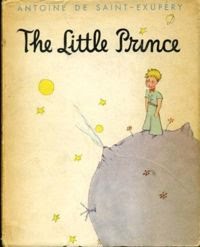
One of his most famous works is Le Petit Prince (The Little Prince), a children's story about a lonely, misunderstood aviator forced, due to engine trouble, to land in the Sahara Desert. There he meets a small visitor from another planet and calls him the little prince....


I first read this sweet, sad story when I was young. I believed I understood it, likely nodded to myself in agreement with the little prince that grownups were very peculiar indeed.

Reading it again from an older perspective, I find it much more than a simple children's story. There's a profound statement here about the human condition, about the foolish things people believe are important, how man has lost his childish wonder, his ability to imagine, to believe.

My feelings were somewhat similar to those I had when reading Jonathan Swift's Gulliver's Travels, a parody of the times (mid 1700s) and a pointed satire that exposes human foibles in an Emperor's New Clothes kind of way.

But The Little Prince does it in a wistful, wishful manner, and unlike my sense of amusement at Swift's work, I felt the same melancholy that the aviator had at the end.

Here are the last two paragraphs of The Little Prince:

For you who also love the little prince, and for me, nothing in the universe can be the same if somewhere, we do not know where, a sheep that we never saw has eaten a rose...

Look up at the sky. Ask yourselves: is it yes or no? Has the sheep eaten the flower? And you will see how everything changes...

And no grown-up will ever understand that this is a matter of so much importance!


This is, to me, the loveliest and saddest landscape in the world. It is the same as that on the preceding page, but I have drawn it again to impress it on your memory. It is here that the little prince appeared on Earth, and disappeared.

Look at it carefully so that you will be sure to recognise it in case you travel some day to the African desert. And, if you should come upon this spot, please do not hurry on. Wait for a time, exactly under the star. Then, if a little man appears who laughs, who has golden hair and who refuses to answer questions, you will know who he is. If this should happen, please comfort me. Send me word that he has come back.

--
Cat

Friday, June 01, 2007

My verse appears in public --

I'm pleased to announce my children's verse - Advice to a Younger Brother appears is the summer issue of Bumbershoot, an online literary magazine. Read it here

--Cat

Monday, March 26, 2007

March 26 -- Robert Frost


Robert Frost March 26, 1874 -- January 29, 1963

Robert Frost's wonderful nature poetry--


Fire and Ice

Some say the world will end in fire,
Some say in ice.
From what I've tasted of desire
I hold with those who favour fire.
But if it had to perish twice,
I think I know enough of hate
To say that for destruction ice
Is also great
And would suffice.


A Hillside Thaw

To think to know the country and now know
The hillside on the day the sun lets go
Ten million silver lizards out of snow!
As often as I've seen it done before
I can't pretend to tell the way it's done.
It looks as if some magic of the sun
Lifted the rug that bred them on the floor
And the light breaking on them made them run.
But if I though to stop the wet stampede,
And caught one silver lizard by the tail,
And put my foot on one without avail,
And threw myself wet-elbowed and wet-kneed
In front of twenty others' wriggling speed,--
In the confusion of them all aglitter,
And birds that joined in the excited fun
By doubling and redoubling song and twitter,
I have no doubt I'd end by holding none.

It takes the moon for this. The sun's a wizard
By all I tell; but so's the moon a witch.
From the high west she makes a gentle cast
And suddenly, without a jerk or twitch,
She has her speel on every single lizard.
I fancied when I looked at six o'clock
The swarm still ran and scuttled just as fast.
The moon was waiting for her chill effect.
I looked at nine: the swarm was turned to rock
In every lifelike posture of the swarm,
Transfixed on mountain slopes almost erect.
Across each other and side by side they lay.
The spell that so could hold them as they were
Was wrought through trees without a breath of storm
To make a leaf, if there had been one, stir.
One lizard at the end of every ray.
The thought of my attempting such a stray!


The Freedom of the Moon

I've tried the new moon tilted in the air
Above a hazy tree-and-farmhouse cluster
As you might try a jewel in your hair.
I've tried it fine with little breadth of luster,
Alone, or in one ornament combining
With one first-water start almost shining.

I put it shining anywhere I please.
By walking slowly on some evening later,
I've pulled it from a crate of crooked trees,
And brought it over glossy water, greater,
And dropped it in, and seen the image wallow,
The color run, all sorts of wonder follow.


On Looking Up By Chance At The Constellations

You'll wait a long, long time for anything much
To happen in heaven beyond the floats of cloud
And the Northern Lights that run like tingling nerves.
The sun and moon get crossed, but they never touch,
Nor strike out fire from each other nor crash out loud.
The planets seem to interfere in their curves
But nothing ever happens, no harm is done.
We may as well go patiently on with our life,
And look elsewhere than to stars and moon and sun
For the shocks and changes we need to keep us sane.
It is true the longest drouth will end in rain,
The longest peace in China will end in strife.
Still it wouldn't reward the watcher to stay awake
In hopes of seeing the calm of heaven break
On his particular time and personal sight.
That calm seems certainly safe to last to-night.


--Cat


Sunday, March 11, 2007

to Nadia


Nadia Anjuman Herawi (1980? – November 4, 2005) Afghan poet and journalist.

In 2005, while she was a student at Herat University, her first book of poetry was published. Gul-e-dodi (Dark Red Flower) became popular in Afghanistan and even in nearby Iran. On November 4 of that year, police officers found her body in her home. It was reported that she died as a result of injuries to her head. Her husband, Farid Ahmad Majid Mia confessed to beating her following an argument, but not to killing her. He stated she committed suicide. The Times Online had this article about this tragic event.
According to friends, Anjuman was seen as a disgrace to her family because of her poetry, which described the oppression of Afghan women. But her mother and close acquaintances insist she would never kill herself. During the Taliban regime, Anjuman and other female writers of the Herat literary circle studied banned writers such as Shakespeare and Dostoevsky. If caught, they risked being hanged.
Anjuman was survived by a six-month-old daughter. Other sources say a six-month-old son.

From The Middle East Times
Under the fundamentalist Taliban regime of 1996-2001 women were denied the right to education and could not even leave their homes without a male member of the family.
Women have been given more freedom since the Taliban were toppled in a US-led campaign in late 2001. But rights groups say that they are still mistreated by men, including through sexual and domestic violence.

Work by Nadia Anjuman:
From Strands of Steel
Which plunderer’s hand ransacked the pure gold statute of your dreams
In this horrendous storm?
--


Do not question love as it is the inspiration of your pen
My loving words had in mind death
--


Even though I am the daughter of poem and songs
My poem was novice and broken
My autonomous twig did not recognize the hand of the gardener
--

I am caged in this corner
full of melancholy and sorrow ...
my wings are closed and I cannot fly ...
I am an Afghan woman and so must wail.
--
Ghazal 1

From this cup of my lips comes a song;
It captures my singing soul; my song.
--

Ghazal 2

There is no desire to speak again; whom to ask, what to say?
I, who was treated ill, what should I not read, what not to say?
--

Ghazal 3

It is night and these words come to me
By the call of my voice words come to me
--

~~~
I came across Nadia's story in a roundabout way -- On a morning newscast I heard of an organization called Little Women for Little Women in Afghanistan founded in 2006 in the Okanagan by a generous and compassionate nine-year-old girl, Alaina Podmorow. Her goal is to work with other young people to help young Afghan women.
This led me to Canadian Women for Women in Afghanistan a truly inspiring group committed to supporting the empowerment of Afghan women and girls
Knowing only what I heard on tv or read in newspapers about the dire predicament of women in Afghanistan I searched Google for women poets from that country. I believed there must be women there who had words flowing from their hearts, women who needed to express that which had so long been forbidden. I wanted to know that these women existed and that the world knew about them. This story about Nadia Anjuman's short, sad life was the first article the search provided.
Her story made me cry. It made me angry. Afghan women have suffered a life beyond my comprehension. To have no say. In anything. Their bodies controlled by men. Never, it seems, kind men. (Perhaps I'll search for a male Afghan poet. But that will be another day.) I can't imagine not being allowed to read Shakespeare. Or poetry. Or to write!
Nadia Anjuman, and others like her, are brave heroes to those who follow. They defied the brutal regime of the Taliban. And still they must fight on.
The saddest thing is that nowhere that I searched could I find the date of her birth. Every site and article gave the year as 1980 question mark
~
To Nadia:
Even the brightest star will burn out and die;
Your words will live forever.


--Cat


Sunday, February 25, 2007

Feb. 26 - Victor Hugo


Victor Marie Hugo - Feb. 26, 1802-May 22, 1885


Victor Hugo is considered the most important of the French Romantic writers. Poet, novelist, dramatist -- The Hunchback of Notre Dame and Les Misérables are among his best known works.

In 1827 he wrote that romanticism is the liberalism of literature.

His lyrical style has been described as 'rich, intense and full of powerful sounds and rhythms.

Hugo's funeral in 1885 was a national event, attended by two million people.


Some works by Victor Hugo:


A Sunset (From "Feuilles d'Automne")

I love the evenings, passionless and fair, I love the evens,
Whether old manor-fronts their ray with golden fulgence leavens,
In numerous leafage bosomed close;
Whether the mist in reefs of fire extend its reaches sheer,
Or a hundred sunbeams splinter in an azure atmosphere
On cloudy archipelagos.

Oh, gaze ye on the firmament! a hundred clouds in motion,
Up-piled in the immense sublime beneath the winds' commotion,
Their unimagined shapes accord:
Under their waves at intervals flame a pale levin through,
As if some giant of the air amid the vapors drew
A sudden elemental sword.

The sun at bay with splendid thrusts still keeps the sullen fold;
And momently at distance sets, as a cupola of gold,
The thatched roof of a cot a-glance;
Or on the blurred horizon joins his battle with the haze;
Or pools the blooming fields about with inter-isolate blaze,
Great moveless meres of radiance.

Then mark you how there hangs athwart the firmament's swept track,
Yonder a mighty crocodile with vast irradiant back,
A triple row of pointed teeth?
Under its burnished belly slips a ray of eventide,
The flickerings of a hundred glowing clouds in tenebrous side
With scales of golden mail ensheathe.

Then mounts a palace, then the air vibrates--the vision flees.
Confounded to its base, the fearful cloudy edifice
Ruins immense in mounded wrack;
Afar the fragments strew the sky, and each envermeiled cone
Hangeth, peak downward, overhead, like mountains overthrown
When the earthquake heaves its hugy back.

These vapors, with their leaden, golden, iron, bronzèd glows,
Where the hurricane, the waterspout, thunder, and hell repose,
Muttering hoarse dreams of destined harms,--
'Tis God who hangs their multitude amid the skiey deep,
As a warrior that suspendeth from the roof-tree of his keep
His dreadful and resounding arms!

All vanishes! The Sun, from topmost heaven precipitated,
Like a globe of iron which is tossed back fiery red
Into the furnace stirred to fume,
Shocking the cloudy surges, plashed from its impetuous ire,
Even to the zenith spattereth in a flecking scud of fire
The vaporous and inflamèd spaume.

O contemplate the heavens! Whenas the vein-drawn day dies pale,
In every season, every place, gaze through their every veil?
With love that has not speech for need!
Beneath their solemn beauty is a mystery infinite:
If winter hue them like a pall, or if the summer night
Fantasy them starre brede.

Translated by Francis Thompson (1859-1907).


More Strong Than Time

Since I have set my lips to your full cup, my sweet,
Since I my pallid face between your hands have laid,
Since I have known your soul, and all the bloom of it,
And all the perfume rare, now buried in the shade;

Since it was given to me to hear on happy while,
The words wherein your heart spoke all its mysteries,
Since I have seen you weep, and since I have seen you smile,
Your lips upon my lips, and your eyes upon my eyes;

Since I have known above my forehead glance and gleam,
A ray, a single ray, of your star, veiled always,
Since I have felt the fall, upon my lifetime's stream,
Of one rose petal plucked from the roses of your days;

I now am bold to say to the swift changing hours,
Pass, pass upon your way, for I grow never old,
Fleet to the dark abysm with all your fading flowers,
One rose that none may pluck, within my heart I hold.

Your flying wings may smite, but they can never spill
The cup fulfilled of love, from which my lips are wet;
My heart has far more fire than you can frost to chill,
My soul more love than you can make my soul forget.

Translated by Andrew Lang (1844-1912).


The Genesis of Butterflies

The dawn is smiling on the dew that covers
The tearful roses; lo, the little lovers
That kiss the buds, and all the flutterings
In jasmine bloom, and privet, of white wings,
That go and come, and fly, and peep and hide,
With muffled music, murmured far and wide.
Ah, the Spring time, when we think of all the lays
That dreamy lovers send to dreamy mays,
Of the fond hearts within a billet bound,
Of all the soft silk paper that pens wound,
The messages of love that mortals write
Filled with intoxication of delight,
Written in April and before the May time
Shredded and flown, playthings for the wind's playtime,
We dream that all white butterflies above,
Who seek through clouds or waters souls to love,
And leave their lady mistress in despair,
To flit to flowers, as kinder and more fair,
Are but torn love-letters, that through the skies
Flutter, and float, and change to butterflies.

Translated by Andrew Lang (1844-1912).


The Poor Children

Take heed of this small child of earth;
He is great; he hath in him God most high.
Children before their fleshly birth
Are lights alive in the blue sky.

In our light bitter world of wrong
They come; God gives us them awhile.
His speech is in their stammering tongue,
And his forgiveness in their smile.

Their sweet light rests upon our eyes.
Alas! their right to joy is plain.
If they are hungry Paradise
Weeps, and, if cold, Heaven thrills with pain.

The want that saps their sinless flower
Speaks judgment on sin's ministers.
Man holds an angel in his power.
Ah! deep in Heaven what thunder stirs,

When God seeks out these tender things
Whom in the shadow where we sleep
He sends us clothed about with wings,
And finds them ragged babes that weep!

Translated by Algernon Charles Swinburne (1837-1909).


-- Cat

Monday, February 12, 2007

Feb 12 - George Meredith


George Meredith (Feb 12, 1828- May 18, 1909)

Victorian poet and novelist, influential in his time.

Some of his works:


Dirge in Woods

A wind sways the pines,
And below
Not a breath of wild air;
Still as the mosses that glow
On the flooring and over the lines
Of the roots here and there.
The pine-tree drops its dead;
They are quiet, as under the sea.
Overhead, overhead
Rushes life in a race,
As the clouds the clouds chase;
And we go,
And we drop like the fruits of the tree,
Even we,
Even so.

First publication date: 1870


Lucifer in Starlight

On a starred night Prince Lucifer uprose.
Tired of his dark dominion swung the fiend
Above the rolling ball in cloud part screened,
Where sinners hugged their spectre of repose.
Poor prey to his hot fit of pride were those.
And now upon his western wing he leaned,
Now his huge bulk o'er Afric's sands careened,
Now the black planet shadowed Arctic snows.
Soaring through wider zones that pricked his scars
With memory of the old revolt from Awe,
He reached a middle height, and at the stars,
Which are the brain of heaven, he looked, and sank.
Around the ancient track marched, rank on rank,
The army of unalterable law.


First publication date: 1883


Modern Love: I

By this he knew she wept with waking eyes:
That, at his hand's light quiver by her head,
The strange low sobs that shook their common bed
Were called into her with a sharp surprise,
And strangled mute, like little gaping snakes,
Dreadfully venomous to him. She lay
Stone-still, and the long darkness flowed away
With muffled pulses. Then, as midnight makes
Her giant heart of Memory and Tears
Drink the pale drug of silence, and so beat
Sleep's heavy measure, they from head to feet
Were moveless, looking through their dead black years,
By vain regret scrawled over the blank wall.
Like sculptured effigies they might be seen
Upon their marriage-tomb, the sword between;
Each wishing for the sword that severs all.

Note: This is the first of fifty sixteen-line sonnets thought influenced by the unhappy history of Meredith's unsuccessful first marriage.


First publication date: 1862


Thursday, January 25, 2007

Robert Burns


January 25, 1759 – July 21, 1796


My Heart's In The Highlands
by Robert Burns

Farewell to the Highlands, farewell to the North,
The birth-place of Valour, the country of Worth;
Wherever I wander, wherever I rove,
The hills of the Highlands for ever I love.

My heart's in the Highlands, my heart is not here;
My heart's in the Highlands a-chasing the deer;
A-chasing the wild-deer, and following the roe,
My heart's in the Highlands wherever I go.

Farewell to the mountains high covered with snow;
Farewell to the straths and green valleys below;
Farewell to the forests and wild-hanging woods;
Farewell to the torrents and loud-pouring floods.

My heart's in the Highlands, my heart is not here;
My heart's in the Highlands a-chasing the deer;
A-chasing the wild-deer, and following the roe,
My heart's in the Highlands wherever I go.

1789

Wednesday, January 10, 2007

January 10 -- Robinson Jeffers


Robinson Jeffers, photograph by Carl Van Vechten, July 9, 1937


Robinson Jeffers January 10, 1887 - January 20, 1962


My favorite poet. I always seem to return to those of his works that make a statement about the world, as he saw it during his lifetime, and as it is today.

From The Academy of American Poets:

Jeffers brought enormous learning in literature, religion, philosophy, languages, myth, and sciences to his poetry. One of his favorite themes was the intense, rugged beauty of the landscape in opposition to the degraded and introverted condition of modern man. Strongly influenced by Nietzsche's concepts of individualism, Jeffers believed that human beings had developed an insanely self-centered view of the world, and felt passionately that we must learn to have greater respect for the rest of creation.


Some works by Jeffers:


The Purse-Seine
by Robinson Jeffers (1937)


Our sardine fishermen work at night in the dark
of the moon; daylight or moonlight
They could not tell where to spread the net,
unable to see the phosphorescence of the
shoals of fish.
They work northward from Monterey, coasting
Santa Cruz; off New Year's Point or off
Pigeon Point
The look-out man will see some lakes of milk-color
light on the sea's night-purple; he points,
and the helmsman
Turns the dark prow, the motorboat circles the
gleaming shoal and drifts out her seine-net.
They close the circle
And purse the bottom of the net, then with great
labor haul it in.

I cannot tell you
How beautiful the scene is, and a little terrible,
then, when the crowded fish
Know they are caught, and wildly beat from one wall
to the other of their closing destiny the
phosphorescent
Water to a pool of flame, each beautiful slender body
sheeted with flame, like a live rocket
A comet's tail wake of clear yellow flame; while outside
the narrowing
Floats and cordage of the net great sea-lions come up
to watch, sighing in the dark; the vast walls
of night
Stand erect to the stars.

Lately I was looking from a night mountain-top
On a wide city, the colored splendor, galaxies of light:
how could I help but recall the seine-net
Gathering the luminous fish? I cannot tell you how
beautiful the city appeared, and a little terrible.
I thought, We have geared the machines and locked all together
into inter-dependence; we have built the great cities; now
There is no escape. We have gathered vast populations incapable
of free survival, insulated
From the strong earth, each person in himself helpless, on all
dependent. The circle is closed, and the net
Is being hauled in. They hardly feel the cords drawing, yet
they shine already. The inevitable mass-disasters
Will not come in our time nor in our children's, but we
and our children
Must watch the net draw narrower, government take all
powers--or revolution, and the new government
Take more than all, add to kept bodies kept souls--or anarchy,
the mass-disasters.

These things are Progress;

Do you marvel our verse is troubled or frowning, while it keeps
its reason? Or it lets go, lets the mood flow
In the manner of the recent young men into mere hysteria,
splintered gleams, crackled laughter. But they are
quite wrong.
There is no reason for amazement: surely one always knew
that cultures decay, and life's end is death.


Wise Men In Their Bad Hours
by Robinson Jeffers

Wise men in their bad hours have envied
The little people making merry like grasshoppers
In spots of sunlight, hardly thinking
Backward but never forward, and if they somehow
Take hold upon the future they do it
Half asleep, with the tools of generation
Foolishly reduplicating
Folly in thirty-year periods; they eat and laugh too,
Groan against labors, wars and partings,
Dance, talk, dress and undress; wise men have pretended
The summer insects enviable;
One must indulge the wise in moments of mockery.
Strength and desire possess the future,
The breed of the grasshopper shrills, "What does the future
Matter, we shall be dead?" Ah, grasshoppers,
Death's a fierce meadowlark: but to die having made
Something more equal to the centuries
Than muscle and bone, is mostly to shed weakness.
The mountains are dead stone, the people
Admire or hate their stature, their insolent quietness,
The mountains are not softened nor troubled
And a few dead men's thoughts have the same temper.


Natural Music
by Robinson Jeffers

The old voice of the ocean, the bird-chatter of little rivers,
(Winter has given them gold for silver
To stain their water and bladed green for brown to line their banks)
From different throats intone one language.
So I believe if we were strong enough to listen without
Divisions of desire and terror
To the storm of the sick nations, the rage of the hunger smitten cities,
Those voices also would be found
Clean as a child's; or like some girl's breathing who dances alone
By the ocean-shore, dreaming of lovers.


-- Cat